somehow i missed this glorious meme. clearly it’s me. squirreLEX. except make them yellow glasses like mine.
cat city bitch
cat cat city bitch
ten ten ten twenties on ya kitties bitch
Hahahaha yes
cash cat is getting really popular right meow. he’s gettin papurrr
(Source: cashcats)
i have no idea who this is or what in the world this has to do with football, but it’s INCREDIBLE
Nontraditional students.
the pen(cil) she’s holding really locks this down. plus the crewneck army-esque sweatshirt that is likely xmas bedazzled
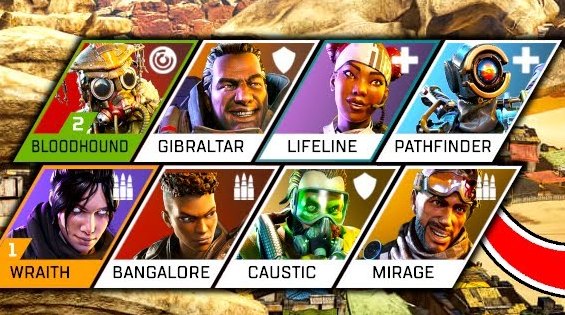
Whoaaaaaaa so true, thanks Courage Wolf. Gaming is so deep. & Thanks, Craig for spotting this and thinking of me.
Respect The Internet @ Santos Party House!
Follow live online at http://www.stickam.com/respecttheinternet
Is marketing ruining the Internet? Join Ketchum on Dec. 3 for a day-long conversation and debate about the role companies can (and should or should not) play in shaping online culture. We’re bringing thinkers and leaders from ROFLCon, Buzzfeed, BoingBoing, VICE, Gawker Media, MIT, Harvard, and, hopefully, you, together to collectively try to figure out if there’s a middle ground between what marketers need to offer and what Web users actually want.
Speakers:
- Mark Frauenfelder, Editor-in-Chief, BoingBoing and MAKE Magazine
- Jonah Peretti, Founder, Buzzfeed and The Huffington Post
- Alexis Ohanian, Co-founder, Reddit, and Founder, Breadpig
- Tim Hwang, Co-founder, ROFLCon
- Alex Pasternack, Editor, Motherboard.tv and VICE Magazine’sscience and technology culture site
- Grant McCracken, Anthropologist and Author of Chief Culture Officer
- Scott Heiferman, CEO and Co-founder, MeetUp.com
- Irin Carmon, Blogger, Jezebel
- Christina Xu, Co-founder, ROFLCon and Breadpig
- Jeff Simmermon, Director, Digital Communications, Time Warner Cable
- Ilya Zhitomirski, Co-founder, Diaspora
- Patrick Davison, Co-founder, MemeFactory, and Researcher, Web Ecology Project
- Greg Leuch, Creator, Shaved Bieber, and Member, F.A.T. Lab
- Mike Rugnetta, Co-founder, MemeFactory, the definitive performance art piece about internet culture
- Lilit Marcus, Co-founder, Save The Assistants, and Editor-in-Chief,TheGloss.com
Agenda:9:15-10:15 a.m. “Memes, Lulz and Internet Culture” Why these things are important, and why marketers might want to pay more attention to what happens organically on the Web.
10:15-11:15 a.m.“Why Geeks Matter”Making the case for why marketers should pay more attention to communities of geeks (not just tech geeks), and less attention to what they perceive to be “the mainstream.”
11:15 a.m.-12:15 p.m. “Mommies, Gamers, Frat Boys and Tweens”Exploring gender, age and race bias in marketing, particularly around the gap between demographic perception and reality when it comes to some of the most important communities on the Web today.
1:15- 2:15 p.m.“The Behavior Gap Between Companies and People”When companies start using social media, they behave very differently than your average Web user —they talk differently, use different platforms and never quite fit in. But can brands and people ever harmoniously coexist?
2:15-3:15 p.m.“Big Data and the Promise of Web Culture”An examination of what large data sets, mined intelligently, can tell us about how people engage with each other and with information on the Web. The future of marketing just might be hiding where Madison Avenue enters Silicon Valley.
3:15-4:15 p.m.“Is there hope? What Does a Symbiotic Future Look Like?”A look down the road and, hopefully, around some corners, at some ideas for how we might better bridge the gap between the internet of the people and the Internet of marketers.
Time: Dec. 3, 9:00 a.m.-4:00 p.m.
HAAAAAA! i actually grabbed a pen to calculate my batman name before reading carefully. related recent tumblr batman awesomeness: goddamn & kitty batman
Meme transmission over the network has a much higher copying-fidelity than communication through image, sound or word. Digitalisation allows the transfer of information without loss, unlike the analog mechanisms of photocopying, filming or tape recording. Fecundity too is greatly increased, since computers can produce thousands of copies of a message in very little time. Longevity, finally, becomes potentially larger, since information can be stored indefinitely on disks or in archives. Together, these three properties ensure that memes can replicate much more efficiently via the networks. This makes the corresponding memotypes and sociotypes potentially less fuzzy.
In addition, the network transcends geographical and cultural boundaries. This means that a new development does not need to diffuse gradually from a center outwards, as, e.g., fashions or rumours do. Such diffusion can easily be stopped by different kinds of physical or linguistic barriers. On the net, an idea can appear virtually simultaneously in different parts of the world, and spread independently of the distance or proximity between senders and receivers.
— Francis Heylighen, Ars Electronica Catalogue, Ingrid Fischer (ed.) (Springer, Vienna/New York, 1996)
Just one great section of Heylighen’s full section here. Also love his thoughts on cooperating memes: towards a global brain?